
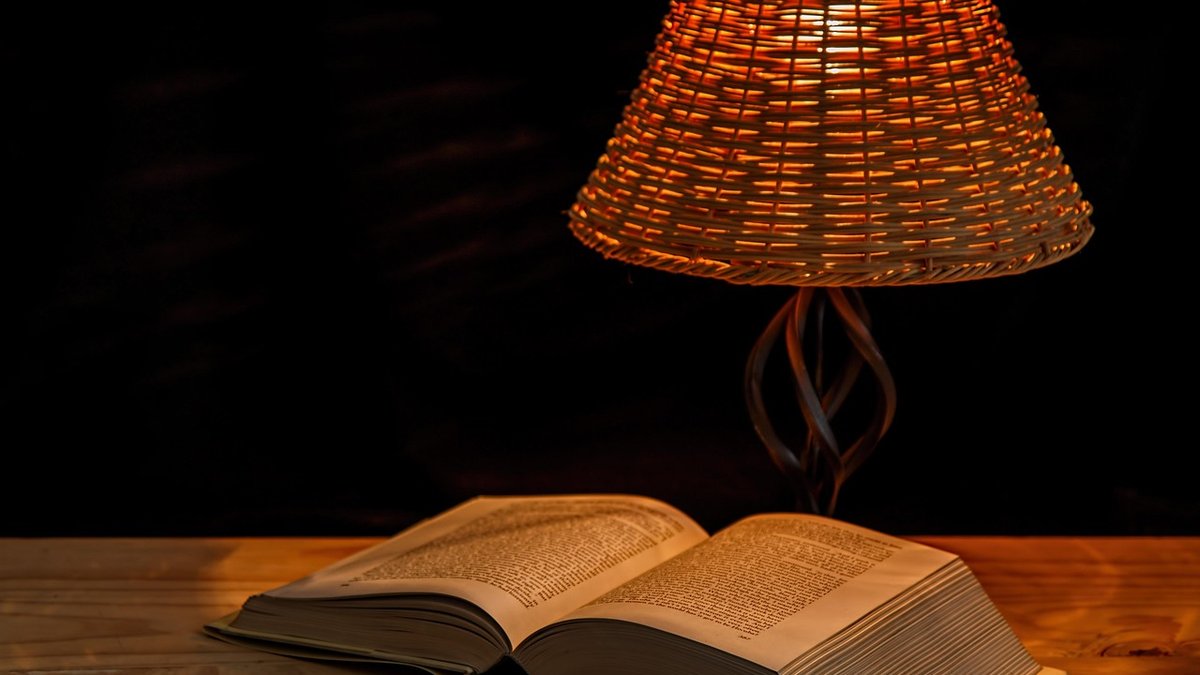
Colour temperature is measured in Kelvin (K), and it describes the colour of light a bulb emits, not how bright it is. Lower numbers feel warmer and more golden; higher numbers feel cooler and more blue. In a vintage home, this matters enormously because the wrong temperature can make beautiful period details look flat or clinical. A traditional incandescent bulb sits around 2700K, which is why old-fashioned filament lamps feel so cosy. Modern LED filament bulbs can mimic that warmth, but they also come in cooler options such as 3000K, 4000K, and beyond. Think of 2700K as candlelight and firelight, 3000K as soft white, and 4000K as a crisp, slightly blue daylight. Brightness is measured separately in lumens, so you can have a dim warm bulb or a bright cool one. The trick is to choose the temperature deliberately for each space.
Hallways are transitional spaces. They are often narrow, windowless, and used for quick tasks: finding keys, putting on shoes, checking a face in the mirror, or carrying bags. Cooler light in the 3000K to 4000K range makes these tasks easier because it feels more alert and reveals detail without heavy shadows. In a dark Victorian hallway, a slightly cooler bulb can make the space feel larger and less oppressive. It also helps with safety, particularly on landings or near front doors where you need to spot a step or a dropped item. That said, going too cool in a period property can feel harsh against original woodwork, encaustic tiles, or aged brass. A practical compromise is 3000K: bright enough to be useful, but not so blue that it clashes with the vintage character of the house. If your hallway has no natural light, consider a higher lumen output at 3000K rather than jumping to 4000K.
Stairs are different. You use them at night, early in the morning, and when you are half-awake. A warm bulb around 2400K to 2700K is gentler on sleepy eyes and reduces glare, which is especially important on polished handrails or pale walls. Warm light also flatters the materials common in older homes: oak treads, pine floorboards, wrought iron balusters, and plaster walls. It creates a soft, inviting glow that makes the staircase feel like part of the living space rather than a utility route. For safety, warmth does not mean dimness. A well-placed 2700K wall sconce or pendant can provide plenty of illumination without the jarring blue-white of a cool bulb. If you have step lights, choose 2400K to 2700K and keep them on a separate circuit or dimmer so you can use them alone at night.
Mixing temperatures between a hallway and its adjacent stairs is one of the most common mistakes in vintage interiors. Your eye adapts quickly, but the transition feels wrong. A 4000K hallway followed by a 2700K staircase makes the stairs look orange and the hallway look blue, even though both are perfectly pleasant on their own. This is particularly noticeable in open-plan hallways, galleried landings, or any space where you can see both areas at once. The result is a home that feels pieced together rather than considered. The same problem occurs when you mix temperatures within one fitting, such as a chandelier with mismatched bulbs. To avoid this, choose a base temperature for your home and vary only the brightness. If you must mix, keep the difference within 500K. So a 3000K hallway and a 2700K staircase will sit together far more comfortably than 4000K and 2700K.
For hallways, a large globe or Victorian-style bulb in 3000K gives a bright, welcoming feel while still suiting period fittings. Candle bulbs in a wall sconce work well at 2700K if the hallway is small and you prefer warmth. On stairs, choose small globes or candle bulbs at 2400K to 2700K, and consider a dimmable main fixture so you can lower the light for evening use. Clear glass shows off the filament and feels more authentic, but frosted glass reduces glare on pale walls and is often kinder on stairs. Always check that your dimmer is compatible with the bulb, especially with LEDs, to avoid buzzing or flickering. The quiet hero of a cohesive vintage interior is not the most expensive fitting, but a consistent colour temperature. Get that right, and your hallways and stairs will feel like they belong to the same house, at any hour.

Hi, my name is Anthony kuber. I am artist and fashion designer.
I love to travel and writing blogging.
Your email address will not be published. Required fields are marked *
Software Developer & Writer
Hey, I'm Diva, a developer and writer blending code and creativity. I'm driven by a deep curiosity and a relentless pursuit of excellence. Join me as I craft digital solutions and captivating stories.


